Pricing guide
What do custom grinders cost? Pricing, minimums and turnaround
Real numbers: how tiered pricing works, what drives cost up or down, why minimum orders are disappearing, and what a realistic timeline looks like.
July 2026
The short answer
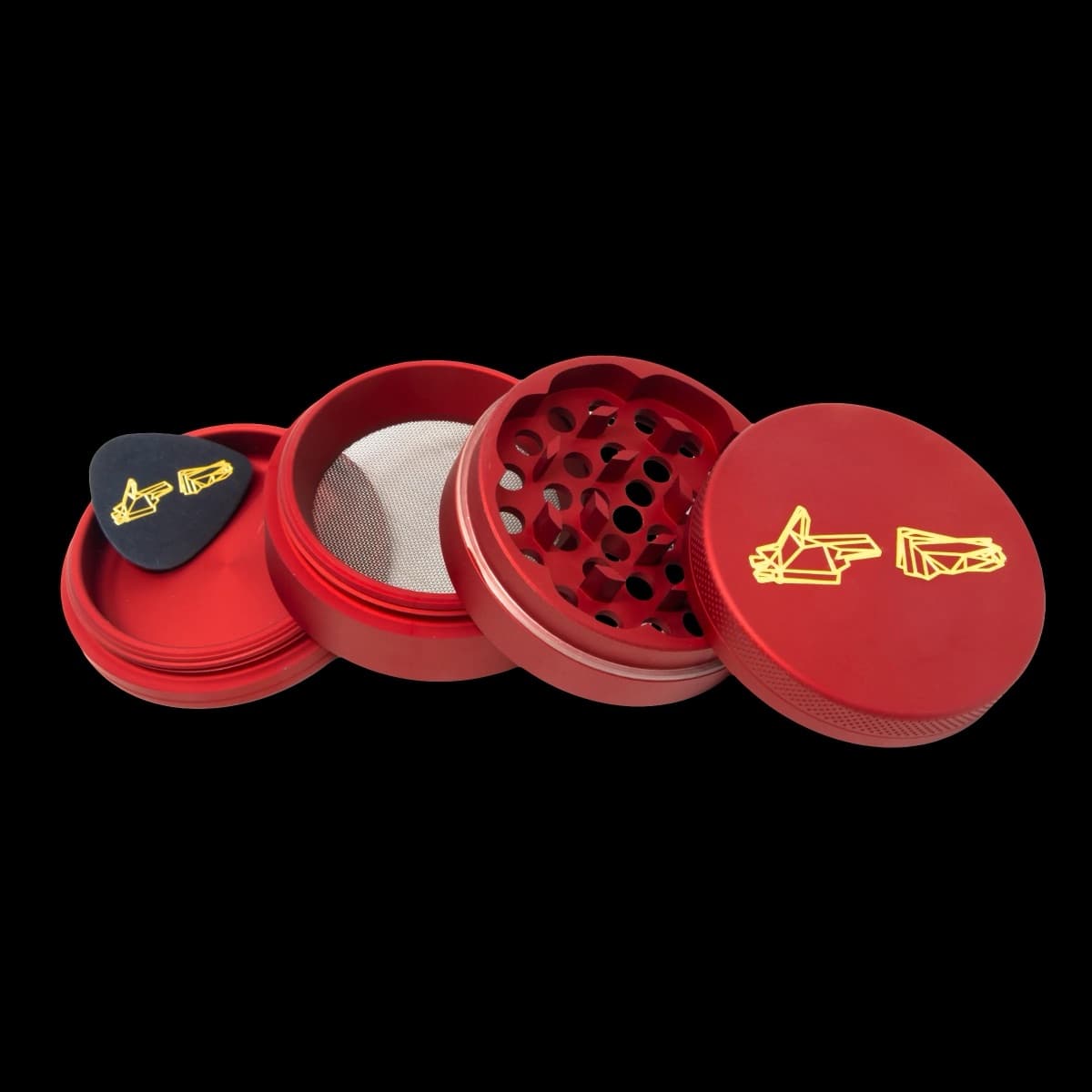
Premium CNC-machined custom grinders run roughly $25–$75 per unit depending on size and quantity. As a concrete, published example: GMI's 2-part premium grinder is $50 as a single unit, $39 each for two or more, and $25 each at five-plus; the 4-part is $75 single, $65 at two-plus, and $30 at five-plus — with wholesale pricing beyond that. Cheap zinc promo grinders cost less, and feel like it.
How tiered pricing works
Machining has fixed setup: toolpaths, artwork prep, proofing, fixturing. Those costs are the same whether you order one unit or five hundred, so per-unit price falls steeply as quantity rises — the jump from one unit to five can cut per-unit cost in half. This is why sampling one unit first is cheap insurance: you pay the single-unit premium once, verify quality in hand, then reorder at volume rates.
What moves the price
Four levers set your final per-unit number:
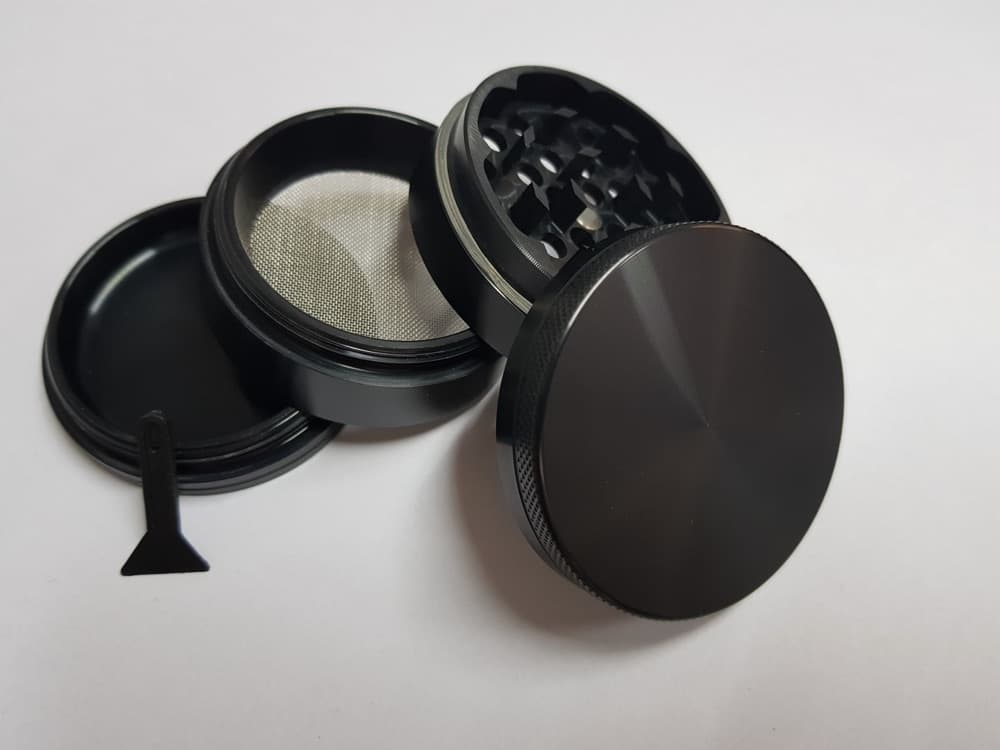
- Build — 4-part (screen chamber + pollen tray) costs more than 2-part.
- Branding method — 3D metal engraving is the premium tier; laser and UV sit in the middle; stickers are the budget path.
- Quantity — every tier boundary you cross drops the unit price.
- Extras — custom packaging, multi-position branding, or batch-specific details like QR codes.
Minimum orders are disappearing
The old industry standard was a 100–500 unit minimum, which locked small brands out entirely. That model is dying. GMI runs no minimum at all — a single custom unit is a legitimate order — which changes how you should buy: prototype with one, put it in front of your team or best customers, then scale. A 70% reorder rate across 300+ brands suggests the sample-first approach converts.
Timeline: proof to doorstep
A realistic schedule from first contact: quote and free digital proof in about one business day; artwork revisions as needed (free, before machining); then 3–4 weeks of production from approval; then worldwide shipping. If you're ordering for a product launch, an album drop or a trade show, work backwards at least six weeks from the date you need stock in hand — and ask about rush options before committing to a deadline.
Getting an exact number
Every project quote comes down to build + method + quantity. The fastest route to a real number is sending your logo and target quantity for a same-week quote — or pricing it yourself live in the shop, which publishes per-unit tiers as you change quantity, before you ever submit anything.